AI Youth Council Discussion: Why People Are Choosing AI Over Doctors for Health Advice?
As a member of the AI Youth Council, I get to dive into some really interesting discussions about all things AI. One topic that’s really caught my attention, and one I felt was important to bring up, is how many young people are turning to AI for health advice before even going to a doctor.
In this article, I’ll give you a peek into what the AI Youth Council is all about, share our conversations around AI and health, and talk about my own experience being part of this group.
What Is The AI Youth Council?
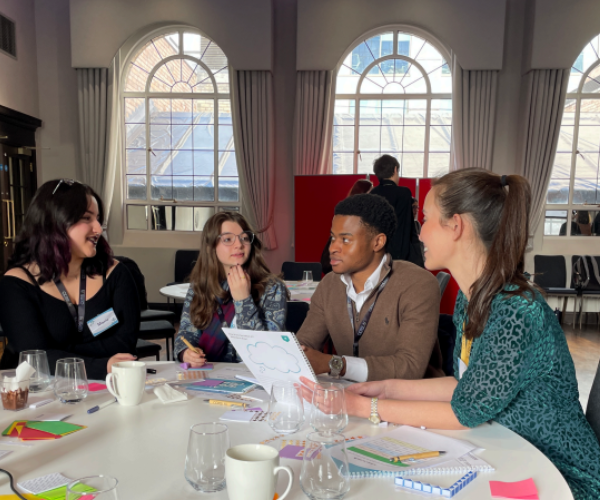
Credit: Kelechi Alozie
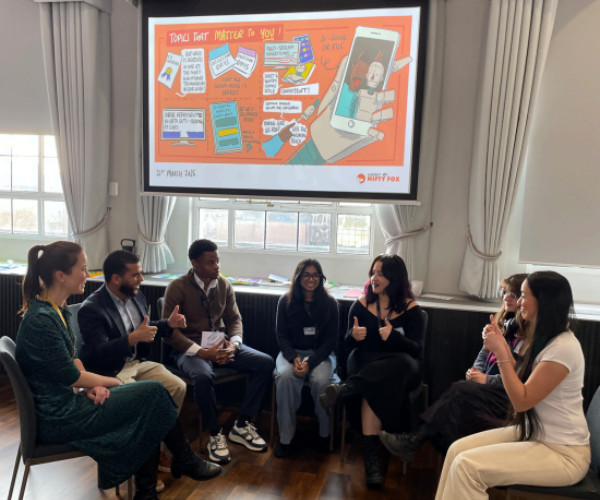
The AI Youth Council occupies a genuinely rare space: it brings young voices, clinicians, and innovators into substantive dialogue about how AI is being deployed in real-world healthcare settings. Not in theory. Not in a controlled environment. In practice, right now, with tangible consequences for patients and practitioners alike.
The atmosphere was galvanising, and one principle emerged with clarity: AI in healthcare is not solely a question of capability. It is a question of trust and compliance.
Safety Around Using AI for Health Information
1 in 4 UK patients are turning to AI for health information, and are reaching for AI before a doctor.
That is not a headline crafted for provocation. It is simply the reality we are living in.
Before the NHS, before a GP appointment, before even consulting a friend, a growing number of young people are typing their symptoms, anxieties, and health questions into an AI chatbot. While that speaks to how intuitive and accessible artificial intelligence has become, it surfaces a question that too few people are interrogating seriously: Is it safe?
That question sat at the heart of my experience at the launch of the AI Youth Council, convened at the Birmingham Exchange by CERSI-AI, NIHR, and Great Ormond Street Hospital, and it is one I am now proud to be actively helping to address.
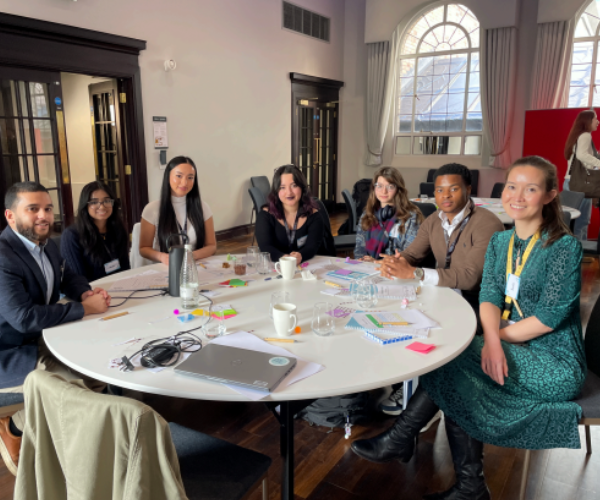
Credit: Kelechi Alozie
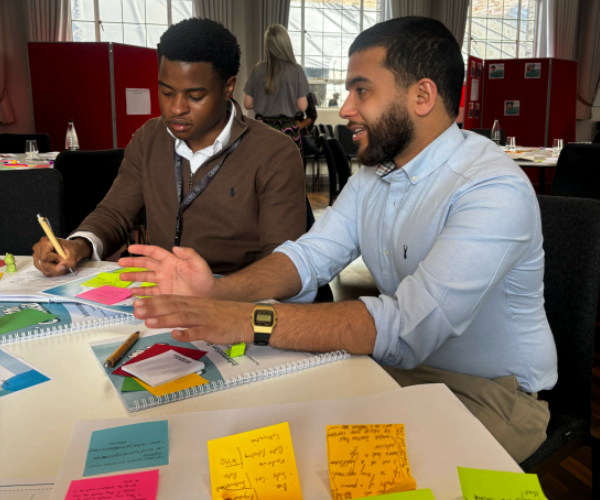
Credit: Kelechi Alozie
My Proposal: A Centralised Healthcare Chatbot
During a session with Dr Qasim, I advanced a proposal I believe could meaningfully improve how AI serves patients, particularly younger demographics. The concept is centred on a centralised healthcare chatbot structured around four foundational pillars:
Foundation Pillars for a Healthcare Chatbot
1. Trusted Sources — anchored in established institutions such as the NHS and leading hospitals, rather than the unverified open internet
2. Specialisation — calibrated to specific medical disciplines such as oncology or cardiology, rather than producing broad, generic responses
3. Clinical-Grade Data — trained on verified patient data, evidence-based case studies, and peer-reviewed research
4. Guardrails and Escalation — embedded pathways to authoritative information, qualified ›clinicians, or relevant services, specifically designed to prevent misinformation and the dangers of self-diagnosis.
The objective is not to supplant physicians. It is to render the AI tools young people are already engaging with considerably safer, more rigorous, and more accountable.
Key Points from The AI Youth Council Discussion About AI vs Health Professionals
AI and Healthcare: Disparity Between Accessibility and Safety
Maria Manola, a student involved in the session, articulated something I had long sensed: AI tools have already become the primary point of contact for many young people navigating health concerns, yet they are not consistently the safest option. That disparity between accessibility and safety is precisely where the AI Youth Council can exert meaningful influence.
AI Assisting Healthcare Professionals
Dr Maaike Kusters will be presenting a compelling demonstration of Tortus AI, an ambient transcription tool that assists clinicians by automatically capturing consultations. It exemplifies AI augmenting human care rather than attempting to replace it. The clinician remains focused on the patient; the administrative burden resolves itself.
That principle, of preserving the human at the centre of healthcare, is one I am carrying forward with conviction.
Credit: Kelechi Alozie
Kelechi Alozie: My Overall Thoughts About AI and Healthcare
The future is unequivocally AI-driven. In healthcare, particularly, that future has already arrived. But it must be constructed on a foundation of trust rather than mere convenience, on ethical rigour rather than operational efficiency alone. Critically, it must involve young people in shaping it, not simply experiencing its consequences.
I am energised to continue contributing to the AI Youth Council and to advocate for a healthcare AI ecosystem that is not only innovative but safe, ethical, and genuinely equitable in its reach.
It leaves me with curiosity about what the future brings for AI and health care. Will we see more people trusting AI for healthcare questions? Will AI become safer and more accurate? Only time will tell. I look forward to continuing my journey with the AI Youth Council, and I’m sure there will be more interesting subjects to share and discuss in the next few months.
.png)
Author: Kelechi Alozie
Kelechi Alozie is a Marketing Manager Apprentice at Pfizer, currently studying at Cambridge Marketing College following his time at Warwick University. Sitting at the intersection of marketing, AI and healthcare, Kelechi brings a sharp commercial perspective to the fast-evolving world of tech.
He is a member of the AI Youth Council, a collaborative initiative by CERSI-AI, NIHR, and Great Ormond Street Hospital, where he helps shape the ethical future of AI in healthcare. He also competed in Base44s Vibe Code Hackathon, where his team built Penny, an AI-powered personal finance coach for students.
Kelechi is committed to ensuring AI is not only innovative, but trustworthy and built with people at its centre.
Location: London