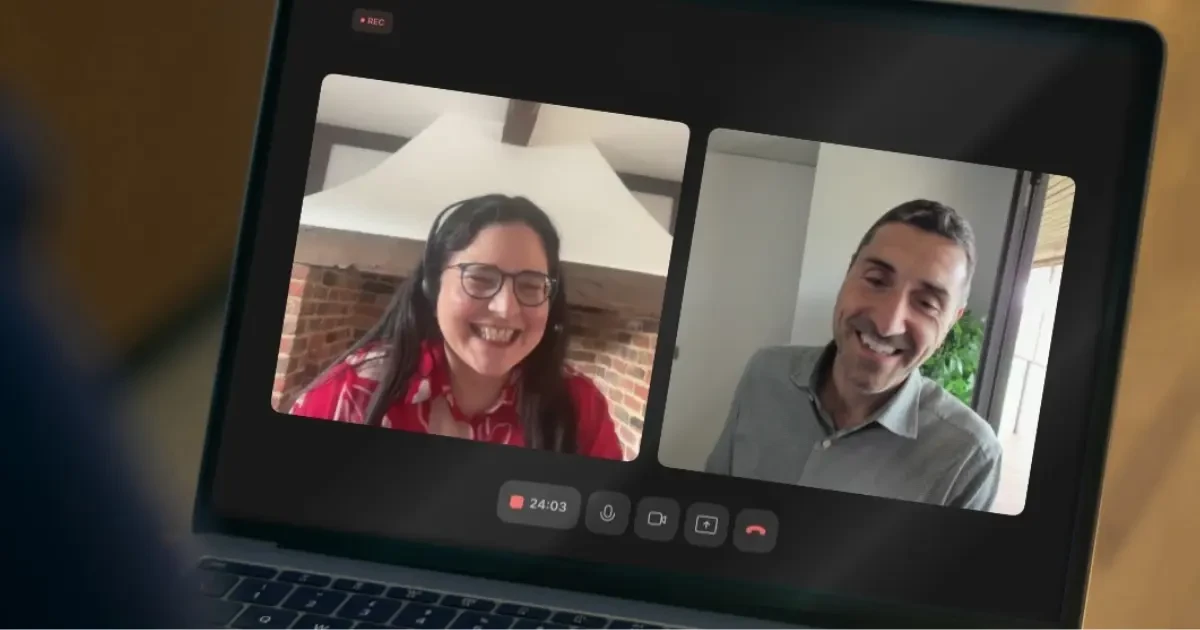
The business of food, with Dawn Grossart
Summary
Marketing expert Dawn Grossart explores how the food industry operates as a fast-moving consumer goods sector with extensive innovation opportunities, spanning from raw produce to manufactured "food-like substances". She discusses data-driven decision-making, the value of provenance stories, and the ethical considerations facing modern food marketers.
Key Points
- The food industry encompasses a vast range from raw ingredients to engineered products, offering numerous marketing specialisations [2:04] [2:26] [3:33].
- Data-driven insights from till data and third-party reports enable precise tracking of consumer behaviour and promotional effectiveness [13:17] [14:06] [14:28].
- Innovation in food marketing includes strategic product placement to encourage shoppers to explore different supermarket areas [10:58] [12:13].
- Horizon scanning of lifestyle trends, such as travel-influenced flavours, drives new product development [14:55] [15:55] [16:55].
- Ethical responsibility in food production involves balancing consumer choice with mindful ingredient selection and supply chain sustainability [21:23] [22:08] [19:35].
Transcipt
Transcipts are auto-generated.
Kiran Kapur (00:01):
Hello and welcome. This week we are in the world of marketing food, and I'm very delighted to welcome Dawn Grossart, who is a college tutor and also a marketing consultant and a high performance mentor. Dawn, welcome. Marketing food. The food industry is huge. Can we just talk about the sheer range that there is?
Dawn Grossart (00:23):
Yes. Thank you for having me on today, Kiran. I'm really delighted to be on the podcast talking about this subject. Yes. My time in the food industry was wide ranging and we all know from visiting the supermarkets and living with the foods that we all choose every day that we are constantly surrounded by a plethora of choices. The description of the fast moving consumer group title is very, very apt because from a marketing point of view, the pace of innovation, the pace of change and the growth in different new innovation categories can be significant. So from a consumer choice perspective, it has really never been greater. And from a practitioner's point of view, I think the opportunities to practise really best practise SOStack based management of your product is actually where I think the interest lies for many people who work in the field. I think in my experience of other industries, including food, it is probably the most professionally structured, organised, and high reaching in terms of models, frameworks, best practise.
Kiran Kapur (01:42):
That's really interesting. So we'll come back to the models and best practise. I'm still trying to get my head around the food industry. So I think of it as I'm dashing to buy my chocolate bar or I'm doing my weekly shop, but that's a finished product, isn't it? So there must be all the work that goes into getting to that finished product.
Dawn Grossart (02:04):
Yeah, that's actually a really great question because actually what is food? Food goes back to produce in its simplest form of fruit and vegetables, et cetera, and all those spices and things which are still productized in the supermarkets. But of course we can buy in many, many different places. So we go from the raw ingredients through from fruit veg, et cetera, all the way through to what I've actually often heard called food-like substances, which of course we eat, but they're manufactured. It's not something that you could go and pick, so therefore it's an engineered product.
Kiran Kapur (02:48):
You make your face as you said food-like substances. I've personally taught and found a really fascinating industry, a company that was making food flavourings. And so you think that the flavouring from a finished product comes from the fact of the ingredients, but no, it doesn't. You add in all these flavourings.
Dawn Grossart (03:09):
Indeed. And much of that is chemically originated. It is a very vast industry. It's a huge topic. And depending on which sector of it we chose to focus on, even produce that's sold in the raw goods state has many, many different opportunities to be marketed. I suppose I typically think of food marketing as in the brand management of something that's being produced, but there is a wide, wide range of options for somebody to come into the food industry and to say, okay, so what am I focusing on? What are my objectives with growing this business and how might I approach it? So I can give you an example actually. It was a very interesting one. Many years ago I used to be the marketing manager for a company that was innovating the bakery sector from an ingredients point of view. So things like cake decorations, flavourings, innovative performance-based substances like gelatin, for example, but presenting them a different way.
(04:21):
And I was working with a supplier that had a complete through the line business from owning the land in Madagascar that he grew vanilla pods on. He managed the whole farm sector of that. And then he had built up and established multiple grocer related business, supplying manufacturers, producers, selling into the grocery trade. And also alongside that, what we call the food service industry as well, which is restaurants, cafes that sort of go in and have your meal or your snack, et cetera, take away or eat in. And there was no wastage from that business whatsoever because the raw material was obviously grown on this land. He shipped it over to France actually where he was working and then had an extraction process for the vanilla essence extracts, et cetera. And then what was left from that, basically the pod grounds were then sold into the ice cream sector where it gives the visual of the flavour of the vanilla, but they actually don't have much taste left.
(05:35):
So it did have vanilla flavouring added in. But the point I'm making is that was a very unique business model and that there was zero waste, which of course now is an interesting sustainable business model that was very profitable by the way. I think that product actually had several hundreds of percent margin on it.
Kiran Kapur (05:54):
Wow. Very fewers can say that we have a product that can do that. But how interesting that it went from literally the field in one country into another marketplace, into another marketplace again, and you could actually track that through.
Dawn Grossart (06:12):
Yeah, because also at that point, the trend in food provenance and having a story around why it was different and why it should be the product of choice was really something that marketeers were becoming very hot on what's the story that we're having around that. I think now we're seeing that it's very common, but I'm talking probably 10, 15 years ago even. The grown in Madagascar really differentiated it from other vanilla pods and the way it was branded and visually merchandised was good positioning.
Kiran Kapur (06:51):
Interesting. I was reflecting this morning in fact about produce and how you said that if you are creating produce, you can put it into different places in the marketplace. As you said, that's one lovely example of the vanilla bods. But if you were creating fruit and veg, presumably you can sell it into somewhere where they would then take that to make your food-like substances or food, but you can also sell it via a veg box. It's my veg box delivery day and that comes from a farm and that's one of the ways they are creating an income stream.
Dawn Grossart (07:22):
That's right. And even think about the ways we can now even vend all kinds of products. I mean, I've seen fruit vending machines. Of course we've got the veg boxes, we've got all kinds of... Now I've seen more farmers trying to go a direct route to market and moving away from the supermarkets. I think there's a big trend in trying to reduce the channel number of chains that links in the chain there. I think as a marketeer, there's a whole academic approach to building a brand, having products, looking at how we grow the market value and the product value. And there's also another conversation about the origin of the product and how we also support the producer, the grower, and help them really be supported for the future and be sustainable. And middleman typically is a distributor or a supermarket. Of course, they all want their cut.
Kiran Kapur (08:19):
Yes. And then the consumer, particularly in the UK, where we seem to feel that food should be very, very, very cheap. And that's not unique to the UK, but it's very strong in the UK that our end product should not be expensive despite the fact all the product, all the range that you've gone through.
Dawn Grossart (08:37):
Yeah, I think that's an interesting opportunity here to shift thinking and also to educate consumers as to what it actually means to have cheap food.
Kiran Kapur (08:47):
You've talked about the consumers and the consumer side. So if I'm coming up with a new product within the food industry, as you say the range of products is incredible, the pace of new products is one of those markets that has a lot of new products all the time, isn't it?
Dawn Grossart (09:06):
Very much so. And in that arena where we've got very data-driven decision making, I personally found that that was an opportunity to help support the establishing of opportunities and looking for where there are gaps and where there is growth potential. And also bringing in research and looking for how we can make best use of the things that we learn about as younger marketers and then coming to really practise management is how do we actually get a good balance between qualitative, quantitative insights using focus groups, for example, and data house sources of information that we can start to get a good read on what is out there currently, what's selling well, where there is rapid growth, is there room for an idea to come in and be tested and proven then launched?
Kiran Kapur (10:07):
Talk me through how that research side works. So would a company have an idea that they're testing it? I don't know, I've got this new chocolate thing that might work, so let me try various options on a consumer, or is it more fundamental than that of what is it that you're looking for in your snack?
Dawn Grossart (10:28):
Yeah, I think a bit of both. So an example I can bring is when I was working in bakery snacking, looking for why people are choosing what they're choosing obviously is a main point of understanding, but where is there a space for something different? And a couple of projects I worked on were actually bringing in licenced branding into bakery market and supermarkets, and there was none of that at the time. It was all on label, it was all bread cakes, et cetera, freshly baked in the bakery. And we were bringing in a hybrid product which was actually baked in the bakery, but actually then packaged with a brand around it to differentiate it on the shelf, to bring more consumer appeal, to make it appear more fun, to actually put things in the box, for example. So we were looking at things like dipping products, so bringing something that you might see in another category in the supermarket and then citing that in another purchase location where you might trigger a decision from a customer who doesn't visit the other aisle.
Kiran Kapur (11:42):
So rather than just say you can dip this with that, so here are the dips, it was more you can dip this with that. Why don't you go to the dipping aisle? So you are encouraged to move around the store as well?
Dawn Grossart (11:54):
Well, actually the other way around. So if somebody wasn't going to visit the ambient store, so as a shopper, I don't typically go down quite a few aisles in the supermarket, but I do visit Fresh and Produce, for example, so I wouldn't see a lot of those things. So it's really like your Ansoft matrix, how do you get your market development? How do you get shoppers who are in the environment large to go to a different part of the store and buy something that maybe they wouldn't see otherwise? It's also about increasing usage occasions as well and bringing more variety into that category shop.
Kiran Kapur (12:31):
Okay. That's really interesting because there are times when you are in a supermarket and you're puzzled by something and it's actually to encourage you to go around the store. It's not necessarily to give you quick convenience.
Dawn Grossart (12:42):
No, and I think I am very much leaning into the supermarket environment because that was my job role at the time, but of course the food market itself is much greater than that. And so yes, the steering of product development being data led and the product development being consumer tested, probably it still is the norm looking at the weekly sales figures that are coming through the till data. And I think just to speak on that moment, I think it's one of the few industries whereas a marketer you can get such accurate reads on what's actually in the marketplace. And I think from a professional point of view, that was quite delightful actually because you could really tell if you were in the cheese category, for example, exactly what was happening across the multiple grocer landscape week by week by week, even day by day and break that down, you could see such robust purchasing behaviour and trends.
(13:39):
You could then work out things like promotional tactics.
Kiran Kapur (13:44):
Yes. The other reason that makes supermarket so interesting is that it's the channel that holds the data. So the supermarket not only knows how well the Dawn Grossup brand is going, but I also know how well the Kiran Kapoor brand is going and they're competing against each other and I know exactly who's buying which and how much they're spending on a week by week, day by day, hour by hour basis.
Dawn Grossart (14:06):
Well, yes, and the interesting point about that is, and I'm thinking I'm still accurate saying this, but there are third party data houses that buy all the data from the Sainsbury's Tescos as. They buy it and then they cut the data and then they package it up and then they sell it back. So if you are Mr. Sainsbury's, for example, you've got Mr. Sainsbury's data, but you don't have the whole market. So the beauty being that we could just go place an order or a report for across all supermarkets, a date range, a suite of information that would give you the read that you needed.
Kiran Kapur (14:46):
I'd never thought about the fact that this is such a data... It's not only data rich, I think one knows that, but it's the fact that it's so uniquely data rich.
Dawn Grossart (14:55):
And driven, heavily data driven, fascinating area if you like numbers. I was much more of a consumer marketer, so very much more interested in the behavioural aspect of why people choose what they choose, what they're drawn to. So lots of research around complimentary lifestyle factors like flavour trends, for example, and even things like travel and the countries that people are going to that are popular holiday destinations will influence things like flavour trends that come back into the food industry.
Kiran Kapur (15:28):
How interesting. And yes, I could see that because actually if you think about the supermarkets and again, what things change over time, yes, I mean Waitress, I think two or three years back had a whole Levant set of foods, presumably because that was a very popular place to go.
Dawn Grossart (15:44):
Remember, it's vastly, hugely paced, fast, fast, fast. Where's the innovation? Things come in quickly, things get dropped very quickly if they're not performing. So there is a good side and a bad side too that you've got to perform, otherwise you're out. So you've got to be very proficient at what you're doing with your marketing decisions so you can really give your product or your range the best possible chance to perform. And so being tapped into innovation, wider consumer trends that are lifestyle related will keep people coming into the store and going, "Oh, well, I went to Greece or I went to Thailand and I love that restaurant that we ate in and have that food flavour, and now I can see it in the ready meal aisle." That's the kind of bigger picture that influences the food development.
Kiran Kapur (16:34):
Yeah. How interesting. So again, one of the things we always teach is this idea of horizon scanning and looking at, you talked earlier on about the macro environment, but this is exactly that writ large, isn't it? It's a real reason to be looking at the trends and what's changing because it will affect people's choices at that time of buying.
Dawn Grossart (16:55):
And typically it would go look into the horizon scan, see what people are enjoying in other parts of their life. It would filter down most often through the restaurant side of the industry really, go through restaurants and then filter into retail and find its way onto the shelves in whatever iteration.
Kiran Kapur (17:15):
Yes. I mean obviously you've got a development time and a production time and then you've got produced packaging and all the other bits and pieces to go with it, so it can't be.
Dawn Grossart (17:24):
Planning point of view for all our marketers listening who enjoy that, it's a really textbook classic project management process where you've got all of the disciplines involved from concept, marketing, ideation, concept through to planning, testing, delivery, taking into all the complexity of packaging, design, branding, photography, all that kind of thing, and then leading into what's my launch window with the retailers because you only get a certain number of opportunities in the year to actually launch in the range. So they do range reviews maybe three, four times a year, and you only have a limited number of times to hit that window.
Kiran Kapur (18:05):
Gosh, so what's a range review? What does that mean?
Dawn Grossart (18:08):
Okay, so a range review, so if I work for a multiple grocer and I'm responsible for, let's just say, looking after the cheese counter sector, I will be very, very data reliant on looking at what's selling. They work off what's called a planogram where they would visually map out their fixtures, including things like own label, branded, break that down into the tiers of branding, maybe I've got my good, better, best kind of branding, and then other influences on decision making. So maybe I've got things like full fat, fat-free, other criteria that people shop around when they're going to look for cheese, for example. And then they would take a timeframe, snapshot and look at the data and then see, right, okay, in that four month or three-month window, what worked, what didn't work, how do we stimulate sales? And then say, right, okay, based on what I'm seeing, I'm going to make a decision that I'm going to do more of this, less of that.
(19:16):
I'm going to move this around, I'm going to take that out. And it could be sometimes a bit of tinkering, but sometimes it could be a radical overhaul or with the intention of maximising profit for the supermarket.
Kiran Kapur (19:28):
Which is your ultimate goal. You want to sell more to make profit, but you also want to sell the right products because those are the ones that are the more profitable products.
Dawn Grossart (19:35):
Right. And I think the more I've become a little bit more seasoned in life and in business generally, I think there's a balance that I think could be more equalised, let's say, to help the supply chain and the producers to be more supported and campaigns around, for example, buying British or having local provenance, the supermarkets tend to be the winners overall in every case.
Kiran Kapur (20:01):
Yes, that is very true. Yes. Gosh, I've learned so much. So there's so much data, there's a lot riding. One of the things that I think is really interesting, and I think it is a social change, is the idea of ethics within food. I mean, not that long ago we had the big campaign against, and I've forgotten what were called Frankenstein Foods at that point, the over-processed. So there's a big push against too much processing food. And again, I see it from a UK perspective, but I also see in other countries that highly processed foods, which maybe weren't there, are coming there. So is there an ethical side that you feel the food industry should be looking at?
Dawn Grossart (20:45):
I think there's a number of ways to bring in that sort of viewpoint, and one being on our health overall is a big, big, big consideration. And the way I'm going to say this is it's the decision by the supermarkets in my interpretation is it's up to the consumer to decide. It's their responsibility if they buy it, if they consume it, how often, et cetera, et cetera. However, I think there's also a flip side of that personally, that there's also responsibility on what we're actually making, what we're actually producing, what we're actually putting out there. And there are many good things about how we produce and develop food for choices and innovation and interest, but also I think we can be more responsible in terms of what we actually put out there, what ingredients we use. And personally now I'm a bit of an avid app user of scanning barcodes and what's in it and seeing the score it gets. And I've become much, much more mindful since my time in the food industry about what goes in the products and the ones I was working on, I won't name names at this point, but there was some clear targeting of children and I didn't really sit well with that because I felt what was produced and promoted wasn't really in the greatest health outcome for the consumer. So there's a bigger question about ethics around the supply chain, and there's also about the actual things that we're making and putting in front of consumers and where does that responsibility really lie?
(22:23):
I think everybody has to have a bit of responsibility.
Kiran Kapur (22:25):
And I think it's certainly not something we're going to solve on a podcast. It's one of those things that... And society changes. Society at one stage is quite happy to have these sort of foods, and then society gets more interested in health outcomes. At the moment we're in the cost of living crisis, so actually maybe I'm more interested in having cheaper food than I'm worried about the food providence. I mean, these are, as you said, it's all horizon scanning, it's working out where all these things come in. Just finally, is it a good industry for a marketer to go into?
Dawn Grossart (22:54):
I personally think it's a great industry for a marketer to go into, yes. It's very demanding. It's very fast-paced. In my career, I've never been in an industry that was more fulfilling and rewarding from a practitioner point of view because it's technically, I think, stands head and shoulders above most because of the way we have access to information and data to make those decisions that we're learning as marketeers, how to be a good marketeer is about critical thinking, about our judgement , and about what we can work with to be executing well. That access to data makes it so much more easy to make choices that can be effective from a pace point of view, from a variety point of view, from a brand and comms point of view, if you love that, and from a data point of view, if you like that, it's all on offer in food and drink.
Kiran Kapur (23:48):
Fantastic. Dawn Grossart, that was really interesting overview of the food industry. Thank you so much for your time.
Dawn Grossart (23:56):
My pleasure. Thank you so much. It's one I do feel very passionate speaking about. There's lots of interest in it, so thank you for having me.