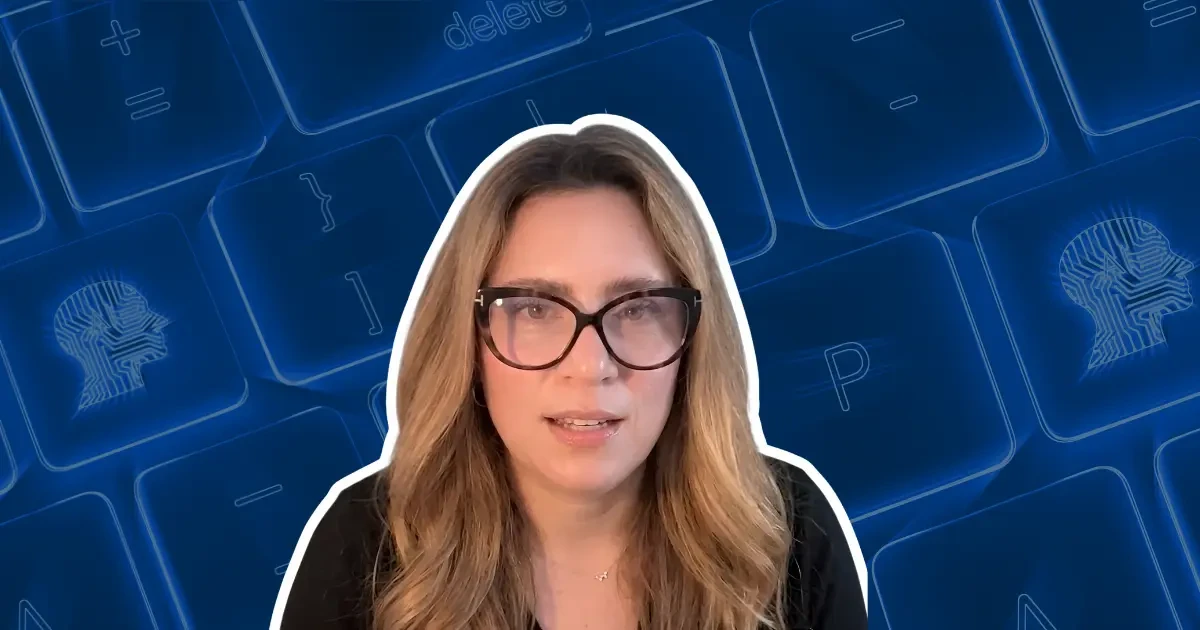
Neuromarketing with Katie Hart: How Senses Shape Consumer Choices
Podcast Summary
Neuromarketing expert Katie Hart explains how different types of memory, senses, language, and sound shape customer engagement and why marketers must design messages that align with how the brain naturally processes information. The conversation highlights practical implications for copy, sensory branding, word choice, and nonverbal audio cues, all grounded in real-time brain measurement using EEG.
Key points
- Different memory systems (long-term, short-term/working, explicit, implicit, episodic, semantic) store different kinds of information, so campaigns should be designed to create both memorable stories (episodic explicit) and repeatable knowledge (semantic) while also leveraging “muscle memory”, like behaviours.
- Sensory cues, especially smell and sound, are powerful triggers of memory and emotion because smells bypass initial processing and go straight to core brain areas, while music and audio can re-activate memories even in people with dementia, making multisensory branding (e.g., signature scents, audio logos, consistent music) particularly effective.
- Reading is cognitively hard work because the brain has no dedicated “reading area” and must repurpose object-recognition regions, whereas images and audio are processed more easily and quickly; this explains the rise of podcasts/audiobooks and means marketers should prioritise strong visuals, clear hierarchy (big headlines first), and spoken formats where possible.
- Individual words like “no,” “new,” “results,” and “guaranteed” measurably change brain responses, sometimes attracting attention, sometimes triggering defiance, fear, or risk-reduction, so copywriting should be tested (ideally with neuromarketing tools like EEG) and tailored to different audiences, including neurodivergent and culturally distinct groups.
- Nonverbal human sounds (laughs, tuts, sighs, yawns) carry rich meaning, can subtly control social situations, and even spread behaviour (like contagious yawning), so audio content and ads can use these cues to signal emotion, energy shifts, and transitions without explicit words.
Transcript
Transcripts are auto-generated.
Kiran Kapur, Host (00:01):
Hello and welcome. We are back in the world of neuromarketing. This is a subject that I get more questions about from students and from the audience than I think any other subject that I've covered. So I'm delighted to welcome back friend of the podcast, Katie Hart, college fellow and author of a book, Neuromarketing: Practical Insights for Improving Customer Engagement. And I have to say, Katie, as anyone who knows you would know, it's an easy read, but there's so much insight in here. So congratulations on the book launch. Before we get into it, what's it like to write a book? How difficult is the process of writing?
Katie Hart, author of Neuromarketing: Practical Insights for Improving Customer Engagement (00:42):
Thank you. Firstly, thank you. That means a huge amount to me. The process isn't really something I'd ever thought about, if I'm honest. I always wanted to have written a book. I always wanted it to be out there. I never truly visualised what the process was going to be prior to having a book out there. But I mean, the publishers were fabulous. They gave me huge amounts of support and guidance, and I just kind of embraced all their expertise and all their experience. Essentially, it was a case of scoping out what I wanted the book to do, so who it was aimed at, how I wanted to pitch it, what the sort of prior levels of knowledge were. I was assuming all of that. And then just breaking it down into chunks. And of course, each of those chunks ultimately becomes chapters. And so you write it a chapter or two at a time, and before you know it, you've ended up with a book.
(01:42):
I mean, it's not quite as simple as that.
Kiran Kapur, Host (01:46):
Yeah, I suspect there was a lot of gin drunk during the process.
Katie Hart, author of Neuromarketing: Practical Insights for Improving Customer Engagement (01:50):
I can't possibly comment. Can you tell which chapter had the highest proportion of gin drunk in it? Hopefully not.
Kiran Kapur, Host (01:57):
So you've got 15 chapters covering all sorts of things. And when I was reading it through again to prepare for this, I was thinking we would start with a section on. Your really interesting chapter is actually chapter five, which is all about memory. So talk me through how memory works from a neuromarketing point of view, because we have different types of memory, don't we? We have long-term memory, we have working memory, we have short-term memory. So from a neuromarketing perspective, how do you look at memory?
Katie Hart, author of Neuromarketing: Practical Insights for Improving Customer Engagement (02:29):
Well, I think it's really interesting that, firstly, we need to acknowledge those different types of memory we have because typically we hear people say, "I've got a terrible memory." And we sort of infer from that that it's one sort, or they've got a really great memory and that cuts across all the different processes within memory. But actually it's not like that. So we can have some areas where we excel. It might be that we're great with numbers or we're great with people's names or faces that we know if we've seen them before, but other memories are harder for us, are more challenging for us. So yeah, the first thing we need to recognise is there's actually lots of different forms of memory. Some of those are determined by the duration. So yes, you've mentioned the long-term memories. These are the ones that mean you can sing along with a song you used to dance to in your front room when you were eight or something, or perhaps a TV show you used to watch when you hear the theme tune for that.
(03:33):
The words are just there in the front of your brain without you ever thinking about it. Other ones are very short-term. So when we get those OTP codes that you get text through on your phone that you have to put into an app, the ability to just retain those, what are they, six or eight digits, something like that, that's a very different part of the memory process. So some are about duration, and some are about actually the function of the memory. So we make a distinction between memories where we are talking about something, where we are articulating something, where we can report something, and memories which we would refer to perhaps more as things like muscle memory, the ability to ride a bike if you haven't ridden a bike for a few months or even years. Or if you are musical, if you sit down at a piano keyboard for the first time in a while or you pick a guitar up, it doesn't take long before you reconnect and you are able to perform proficiently.
(04:37):
And then in terms of even the things that we report, we can articulate. We've got things which are knowledge. So if I quiz you about the currencies of countries or the capitals of those countries, you might be able to tell me what the capital of certain places are. That's kind of fact, that's kind of knowledge that you have. Or we also have the type where you report events, so where you can recall your 21st birthday party or last New Year's Eve or the birth of your child. All of these are different parts of the way memory functions, and they all really are there for quite different reasons. And if we look back through our evolutionary past, we can see that some things were important for us to retain that information and to learn it and to be able to pass that information on from one season to the next, one generation to the next even.
(05:34):
And other things were much more short-term. They're kind of used and then deleted. And wouldn't it be nice if we could actually choose what we deleted? I often think some of us with very busy, overwhelmed lives, it would be nice to free up some of the space taken up by that song that I used to sing in the playground with the skipping rope when I was seven. Don't really need that anymore.
Kiran Kapur, Host (05:56):
And sometimes it's the awful memories. The ones that you wake up in the middle of the night sort of feeling terribly embarrassed about are stuff that nobody else will remember at all, but you remember it because you said something or did something or wish you hadn't or got laughed at. And those are the things that you retain.
Katie Hart, author of Neuromarketing: Practical Insights for Improving Customer Engagement (06:10):
Yeah. You torture yourself with it time and time again, can't you? The sort of, why did I do that? And why did I hurt that person? Yeah, absolutely right.
Kiran Kapur, Host (06:20):
Okay. So I can understand that some of these have come through from an evolutionary side. And what was interesting is as you were describing memories like singing that song in your front room or the birth of a child, what immediately comes into your mind is an image, a picture, but also sounds and possibly emotions and smells and all sorts of other things. So memory does trigger. It can be triggered by you saying think of that, but also perhaps by smelling something or hearing something?
Katie Hart, author of Neuromarketing: Practical Insights for Improving Customer Engagement (06:49):
Absolutely. Yeah. And that's something that I think a lot of brands are starting to tap into. I mean, we've seen a huge development in terms of learning about the senses and which ones really can be used to capitalise on that building of memories, because essentially that's what we're trying to do. When we're building associations around a brand or around a product, we need to layer those upon what people already know and understand. So yeah, smells. I mean, smells are incredibly strong because they bypass the first level of processing within the brain. So instead of them going to a key part of the brain and then being redistributed out for processing, when smell comes in, it goes straight to core areas of our brain, which is where we find memory and emotions as well. So we can smell something and we may not be able yet to articulate it.
(07:48):
We can't tell you what that smell is, but God, what is that smell? It takes you back to a person or to a classroom cupboard sometimes or to the most incredibly specific places. And your emotions are opened up at the same point as your memories are activated, but you can't label it yet. That kind of rational development is way behind the curve because the smell has triggered those key parts of our brain so effectively so quickly. So yeah, smells do that. Sounds do it as well. Music has a very strong connection with memory. And there's lots of examples where we've seen people who are suffering from dementia, Alzheimer's, things like that, that can be reached in an unparalleled way by reconnecting them with music from their era. Or if they were musical in some way, suddenly they become animated again and they can function very proficiently at a keyboard or in a drum kit or whatever their instrument of choice used to be.
(09:05):
So it really does have a phenomenal ability to stimulate some of those areas of memory. Again, not all areas, but some can be very activated by all the senses, but particularly, yeah, smell and sound are very strong.
Kiran Kapur, Host (09:22):
So you said about frontline processing and then that smell goes behind that. So that implies I've got two awesome, probably many more, but two simplified two things going on in my brain. Is the frontline processing moment sort of rational side?
Katie Hart, author of Neuromarketing: Practical Insights for Improving Customer Engagement (09:37):
So the frontline processing is where the information comes in from the senses, and it's then processed at a very rudimentary level before it's then passed back out again for much more detailed processing. So at that first level, there is a kind of threshold where the brain determines how much resource to give it, how important it is, how much allocation to attribute towards it. But essentially that's a barrier. So with smell where it bypasses that, it literally is sort of fractions of a second, but it means that we get all the smell. It comes straight through to us and is then active within our brain before our brain has a chance to have made any sort of decision about the effectiveness of it or its impact or its relevance. It's there and it's already working.
Kiran Kapur, Host (10:32):
So one of the things you talk about is the difference between explicit and implicit memory. And I found those really interesting because we've got, you talk about episodic explicit and semantic explicit. So could you explain those further?
Katie Hart, author of Neuromarketing: Practical Insights for Improving Customer Engagement (10:49):
Yeah, absolutely. So episodic explicit. So explicit memory are the types that we can talk about. These are the ones that we can share. These are the ones that we can communicate, we can cascade, rather than the things that we just demonstrate. So the implicit ones are the things we demonstrate. Explicit are what we can share. So episodic explicit, these are the ones where we have events or things that we want to talk about. So like your recollection of being proposed to, or your recollection of that person's presentation within the boardroom meeting that you've just attended. Or it can even be an episode of your favourite soap opera, but Love Island, whatever's going on at the time. The fact that we can use this part of our memory to convey that in a meaningful way to somebody who wasn't there or perhaps was there, but experienced it from a different perspective allows us as humans to connect.
(11:56):
I mean, it's fundamentally what underpins the popularity and the impact of storytelling. How many times do we see within marketing the need to tell stories and the desire to be able to share information in a way that people can then pass on themselves? It all comes down to this episodic explicit memory.
Kiran Kapur, Host (12:20):
So
Katie Hart, author of Neuromarketing: Practical Insights for Improving Customer Engagement (12:21):
It's something that is built within us. It's something that has served us for thousands of years of our evolutionary past, whether we were sitting around campfires and a stranger is invited to join us who talks of lands that they've been to and places they've experienced and people that they've met. All of that ability to share means we get brought in and we experience it through them and through their retelling of it. So it's a really key part of our memory process.
Kiran Kapur, Host (12:54):
And you said that implicit memory was how I behave?
Katie Hart, author of Neuromarketing: Practical Insights for Improving Customer Engagement (12:59):
Yeah. So these are the things that we can't articulate, but we can demonstrate. So things like your ability to swim, for instance. So these are things that you can show, but you don't. Trying to describe to somebody how to swim or how to ride a bike would be really hard.
Kiran Kapur, Host (13:19):
If you've
Katie Hart, author of Neuromarketing: Practical Insights for Improving Customer Engagement (13:20):
Done it, if it's laid down in your memory, the next time somebody puts a bike in front of you and says, "Let's go for a ride around the common," you can get on it and you might wobble for the first couple of metres, but then after that you would very quickly get into your rhythm and you've got it all. It's within your memory.
Kiran Kapur, Host (13:40):
Yes. I mean, how often does one, particularly if a child asks you to do something or show them something, and you end up going, "I can't explain it, but I can show you because it's the only way to do it. I'm a trumpet player, but I couldn't describe how I play the trumpet." Absolutely. I can blow through it and get someone else to wiggle a valve, but that's about as far as I can go. But
Katie Hart, author of Neuromarketing: Practical Insights for Improving Customer Engagement (13:59):
This happens a lot at work as well. When you do something routinely, and you are very comfortable and very familiar with it, when someone challenges you and says, "Can you write that process down?" It actually becomes quite hard. I mean, I remember at school we were challenged with writing down the process for something as simple as making a sandwich or a cup of tea. And how many of us forgot to write the step that says, take the teaspoon out once you've stirred it? I remember my, I think it was a design technology teacher or something laboriously going through these step by step and saying that we were all blinded as a result of our processes because we'd missed that critical step. And yeah, it's something that is apparent a lot. And we can see it also when it comes to coding and trying to get robots to do things we want them to do, they don't have that ability to pick up the nuances of what we as humans do.
(14:58):
So yeah, when you play a musical instrument, a lot of that comes down to your experience. You know just the right mouth shape, you know just the right amount of pressure to apply to the valves. It's all there. It's all within you. So those are the sort of implicit memories.
Kiran Kapur, Host (15:15):
Brilliant. Thank you. So I also wanted to move us on to chapters 10 and 11, if anyone else is following along with the book. But you talk about words and processing language, and then we're going to talk about the oral aside and sounds. So processing language, you said that actually, when we were talking beforehand, you said that reading is actually incredibly hard. It's hard work on the brain.
Katie Hart, author of Neuromarketing: Practical Insights for Improving Customer Engagement (15:38):
It is. Yeah. Yeah. So I think this is something that all marketers need to know and be aware of because very often, and I've done it myself and I still do it, we tend to fixate on the words and on the language, and we might spend a huge amount of time on the copy. And yes, that's critical. I'm not saying that we need to reduce that, but what I'm saying is we need to appreciate that when the brain is presented with a piece of material or a piece of content, it is much harder for the brain to process the written elements of it rather than the visual elements. So our brain naturally makes sense of images and visual information far, far quicker. And that's because if we look at key areas within our brain, we do have parts of our brain that are given over to the development of language.
(16:37):
So our understanding of the spoken word, how we create sentences, how we attribute meaning to words and syntax, all of that. There are parts of our brain in the temporal lobes that are conveniently located near our ears which are predisposed to do that and they allow us to communicate in a very rich way. But there is no part of our brain that is predisposed for reading. So this is a relatively new innovation for us as human beings. If you think about the thousands, hundreds of thousands of years that we've been evolving for, the written word is relatively new. And so there is no part of our brain yet that has evolved to serve that. So what actually happens when we learn to read, and anybody that's had children or is around children learning to read, you know it's a very hard process. It doesn't come easily.
(17:38):
And what we have to do is essentially repurpose parts of our brain that were originally designed for other things to allow them to incorporate the skill of reading. So we're looking at parts of our brain which are based around identifying objects and those allow us to identify shapes. And over time we realise that a lowercase E is actually the same sound as an uppercase E, even though they are very different shapes when you look at them on a page. And then we start to realise that by putting letters together, we get sounds. And then when put more of those together, we get words and words together and we start to be able to read a sentence and paragraphs and pages and books all fall out of that. It's a beautiful process, but it is hard work for our brains. So we are acutely aware of the fact when it comes to the brain allocation of resources, it is much more labor-intensive for the brain to read a passage of text than it is for the brain to infer from an image or some visual content or audio indeed that's being presented to it.
(18:58):
The sort of irony of writing this book and knowing the torture I was going to be inflicting on people. I mean, you said it was accessible and that's so good to hear because I wanted it to be fairly easy and light and to feel conversational so that it doesn't feel too heavy because I do appreciate the burden that it takes on our brain when we are having to read words in this sort of classic format.
Kiran Kapur, Host (19:28):
How interesting. Do you think that's behind the rise of things like podcasts? I mean podcasts and audiobooks have really taken off. Is it because technology is allowing us to do that?
Katie Hart, author of Neuromarketing: Practical Insights for Improving Customer Engagement (19:38):
Yeah, I think there's a number of reasons. So definitely yes, I think it allows us to access huge amounts of information in a way which is much easier for us to digest. I think it also opens up so many more environments where we can access it as well. So I tend to stick my AirPods in and take the dog out or something. I'd never read a book walking along. I mean, I'm a book lover, but I know I wouldn't be safe trying to engage in content in that way. But the other thing I think is that actually we gain a lot more when we hear the sort of intonation. I don't know whether you've had experiences of people who've interpreted a text or an email the wrong way.
Kiran Kapur, Host (20:21):
Oh yes.
Katie Hart, author of Neuromarketing: Practical Insights for Improving Customer Engagement (20:22):
And we've all seen situations where things can be misinterpreted or misconstrued in quite disastrous ways. But when you listen to people in a podcast or even if you listen to an author reading a book on Audible or something like that, you get the intonation, you get the emphasis where they intended the emphasis to be placed. And so it ends up being a much richer experience and we connect with it in a much more meaningful way than we are able to by seeing those same words written down in black and white on a page.
Kiran Kapur, Host (20:59):
Interesting. And you have a very nice description of the use of fonts and why fonts make a difference and how graphic design, you read the big bit first because that's what catches your eye.
Katie Hart, author of Neuromarketing: Practical Insights for Improving Customer Engagement (21:12):
Yes. And it's easy. Again, it's easy for our brains to process that. So if we are going to apply the conscious effort of trying to read a piece of text, we start with a big bit. And from that we then decide, is it worth me carrying on? It's the basis of all the newspapers is the headlines are there to draw you in. And it's the same with articles on LinkedIn, blog posts, anything. We want the big piece of text to be actually what helps our brain to decide to apply more resource to us than going further into the depth and detail.
Kiran Kapur, Host (21:51):
Absolutely. And you also have a section, you talk about individual words can change our brain. So obviously this is something as copywriters we should all be aware of, but what sort of words should we be looking at?
Katie Hart, author of Neuromarketing: Practical Insights for Improving Customer Engagement (22:07):
There's a range of words that we can see that actually they do shift the way the brain responds. So very simply things like no. When you hear the word no, actually that has a really strong response within our brain. And for some people it triggers a kind of defiant response. It's like, you're not telling me no. And it allows us to almost engage another level of resource once we've been told that we can't do something. For other people, it makes us very submissive and it kind of shuts down creativity. Words like new as well. So very often we're looking for innovation. We're looking for new solutions. Is this going to be something that makes my life easier or that saves me time or that helps me to connect to my children in a more effective way? Having new on something, again, it draws that brain in because when we're scanning a busy environment and we're looking for things, the idea of something being new can be very effective.
(23:14):
Not in every case. I mean, with all of these, we need to appreciate that obviously we're starting to understand a lot more about different sorts of brains and different processing methods. So again, when you were talking about the popularity of podcasts, for people who struggle, if they're dyslexic or some people with ADHD that struggle to literally sit down with a page full of text in front of them, obviously podcasts suit them better. Again, with the word new, although generally it's a very positive response, for some people who are on the autistic spectrum, actually that triggers a fear response because actually it's change. And if you have a new improved recipe, for instance, written across something, that's a break from the routine and a break from the control and me knowing and understanding what I'm about to receive. And for some people that can be absolutely the reverse.
(24:16):
It can actually be negative and quite debilitating.
Kiran Kapur, Host (24:19):
That's really interesting. And also, of course, sometimes as a society, we've been through so many rapid changes. And I'm somebody that loves the new and the shiny and the exciting and all looks squirrel, let's go do something. But actually there are occasions where you just go, "The last thing I need now is something else that's new."
Katie Hart, author of Neuromarketing: Practical Insights for Improving Customer Engagement (24:35):
So you can build up an aversion to it, but in terms of the word itself, it will attract attention. So it's what you then do with it that will determine whether people are on board and excited and in full-on squirrel mode, as you say, or whether we are depleted and fatigued and actually switch off from it. So the brain will notice words like that. There are also words like results, which again, the brain is viewing positively. It stands out very well for us. Things like guaranteed as well, where we understand that the risk is reduced because that's what we're constantly doing when we're decision-making; we're kind of playing off risk. What have I got to lose? What have I got to gain? So words like guaranteed that imply that that risk level is reduced, they are very popular as well, so they can certainly change.
(25:36):
So there's lots of different words that we're learning about that really do have a profound effect.
Kiran Kapur, Host (25:42):
I think it's possibly worth pointing out what I should have said earlier on, that you are not just, this isn't research that you've just invented. You've actually sit and watched brains light up, haven't you? You've seen it happen.
Katie Hart, author of Neuromarketing: Practical Insights for Improving Customer Engagement (25:55):
Yeah, absolutely. And I was working with a brand recently who were trialling some different words that they wanted to use. They're kind of repositioning themselves within the industry. And so they wanted to show that by using some quite different language to create that differentiation. And so we trialled very specific individual words, and it was phenomenal, the response we got. Some words were very exciting. People were curious. They were filled with anticipation about what these would mean. And other words, people just rejected outright a complete dismissal and a complete shutdown in terms of their attitude towards them. And the beautiful thing is that we all learned from this. This wasn't something that going into it, we could have predicted which words fell which side of that line. So yeah, by doing the research, by going out and asking the questions and capturing people's responses using the sort of EEG set that I've got behind me here, we're able to actually see which ones the brain responds positively to.
(27:04):
And we could never get that information by asking our participants.
Kiran Kapur, Host (27:08):
No, because if you asked me, do I always like the word new? The answer would be yes, of course I do. But actually there are times when I really, really, really don't want it because we've just had yet another upheaval that's gone on in society and that's not what you need.
Katie Hart, author of Neuromarketing: Practical Insights for Improving Customer Engagement (27:20):
Yeah, absolutely.
Kiran Kapur, Host (27:22):
That's really interesting. Do you think there's a cultural difference to the words as well?
Katie Hart, author of Neuromarketing: Practical Insights for Improving Customer Engagement (27:27):
Yes. Yeah, definitely. So that is something that we can see is that the words that we use are given meaning in terms of not just the cultures, but also the families and even the generations that we have. So whether we view a word as being positive changes as we evolve and as we grow up. My daughter gave a brilliant example recently of her form tutor at school who used a phrase which all the kids are using. And when they use it, they know exactly what they mean and it bonds them and it's part of their shared reference and their shared understanding. When the form tutor used it, they were cringing. I mean, it was just excruciating. And she said, I said to him, "Sir, don't say that." And it had completely the opposite effect and sort of alienated him from them because he was perhaps perceived as trying too hard to be with them, to be young and with them.
(28:29):
So yeah, it does have a very significant effect within circles within our societies and our cultures.
Kiran Kapur, Host (28:38):
I suppose, yes. And actually, it's a phrase that the young are using. They're using it to be part of their own gang, aren't they? Yes. So somebody else trying to muscle in on that if that's how it's perceived.
Katie Hart, author of Neuromarketing: Practical Insights for Improving Customer Engagement (28:49):
Yes. And it's quite interesting how with a lot of these things, not just the younger generation, but if we look at groups who are characterised by any traits that they have in common, when the language leaks out of that and becomes more mainstream, they turn their back on it. Actually, that isn't what defines us anymore. That's so last year. They reinvent themselves. They have new phrasing, they have new references which they rely on. So it does become part of their identity. And again, part of that way that they welcome members. They have that shared experience that they can all draw on, and they can control and manage that. And when it gets outside of those borders, then their sense of community is reduced.
Kiran Kapur, Host (29:43):
Yes, because the last thing they want is somebody else apparently being part of their group.
Katie Hart, author of Neuromarketing: Practical Insights for Improving Customer Engagement (29:49):
Yeah. And yet with brands, it's what we're looking for is that kind of leaking out the key phrases when it becomes part of normal conversation. I mean, I'm thinking of the should have gone to Specsavers, but lots of other lines exist like that where it becomes actually part of the normal phrasing that people have. What a fabulous success that is for a brand to achieve. So yeah, we need to see where we've got potential to try and allow our taglines or our phrases to cross over and to be something that is used by a wider group and use them to be evangelical and share about our brand and the values that we have or the difference that we provide and actually where that might be perceived as being a threat and it would end up ultimately in rejection.
Kiran Kapur, Host (30:47):
I wanted to end a little bit more on sounds because obviously we're on a podcast, so that seemed to be a very sensible place to be. And we've already talked about music, but you have a very interesting area about nonverbal human sounds, which I thought was really, really intriguing.
Katie Hart, author of Neuromarketing: Practical Insights for Improving Customer Engagement (31:03):
Yeah. I mean, we make them all the time. I just have that laugh. Sneezing, all sorts of examples where what we can actually do is convey a huge amount of information through a very simple nonverbal sound that we utter. So I don't know how well it'll come across on a podcast, but if I...a tut and a sigh.
(31:36):
As a parent, you can control a dinner conversation by a tut and a sigh. Now I've not done anything verbally, but yes, those sounds that I utter have a huge amount of communication within them. So we need to appreciate that there's lots of these that are available to us and that some of them, again, we respond to very naturally. So yawns is another one. To hear somebody yawn is very infectious and it can set other people off yawning as well. So there is even that level of engagement where through uttering a sound like that, I can change the behaviour of other people in a way that we would never be able to. And if I yawn now, I wonder how many yawn -
Kiran Kapur, Host (32:34):
Yes, and I'm having to force myself not to yawn. But yawn's fascinating because actually there's a, oh God, I'm bored yawn. And there's a, oh, I'm having a stretch and a yawn, which have very different emotions behind it. And what made me think about it as I was reading your book and I was thinking, oh yeah, you can do a lot with something like a yawn.
Katie Hart, author of Neuromarketing: Practical Insights for Improving Customer Engagement (32:56):
Yeah. I think there are actually seven different reasons for why we yawn. So yeah, there's lots more to yawns than we might initially perceive. But yeah, it's all about that flooding the brain with oxygen. So if it's a bored, oh God, is this lesson ever going to end type or you're in a stuffy room and your brain is crying out for oxygen. Whereas the other one where you say you do a stretch, that's anticipating a shift change. That's a, right, what are we doing now? I've flooded the brain with oxygen. Let's get on with the next thing. So there are lots of different times when our brain sends a message to say, we need more resource. We need more oxygen. Get it through here quick. And one of the most effective ways to do that is to trigger a yawn.
Kiran Kapur, Host (33:48):
Yes. And some adverts use that incredibly effectively, particularly the stretchy yawn about a yes, and I'm onto the next thing. It doesn't say it, but you are in that moment with the advert. Yes, I think yawning was one of the ones that really surprised me when I was contemplating what you said about nonverbal sounds. It is very, very. And again, I suspect it's cultural, though all cultures will yawn, of course, but I suspect there are different cultural overtones to different types of yawn.
Katie Hart, author of Neuromarketing: Practical Insights for Improving Customer Engagement (34:17):
Yes. Yeah, yeah. I mean, it's interesting. I don't know. You've just made me question. There's a piece of research there. I'm just wondering to what extent people can tell the difference between the sounds of those yawns, whether they do sound very different if I'm a bored kind of yawn as opposed to a, what are we doing next kind of yawn. To what extent would that come across to somebody who's hearing that?
Kiran Kapur, Host (34:48):
I'll leave you to that piece of research.
Katie Hart, author of Neuromarketing: Practical Insights for Improving Customer Engagement (34:52):
With neuromarketing, you always end up with more questions than answers.
Kiran Kapur, Host (34:56):
Katie, that was absolutely brilliant. Thank you so much. And Katie's book is of course, available from all good bookshops. It is Neuromarketing: Practical Insights for Improving Customer Engagement, and it is a very conversational read as you would expect. Katie, thank you so much.
Katie Hart, author of Neuromarketing: Practical Insights for Improving Customer Engagement (35:13):
You're welcome. Thanks for having me on.